
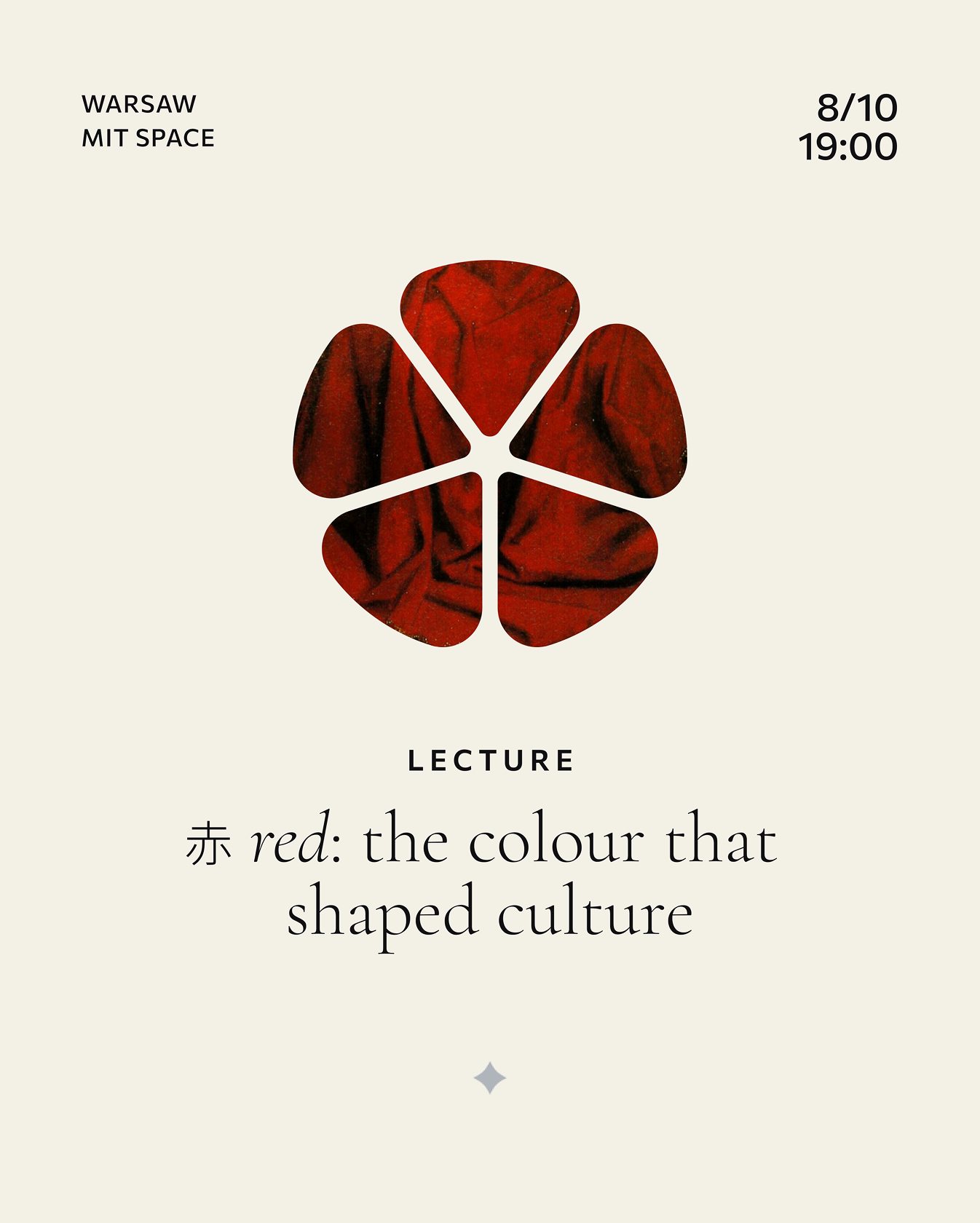

Red: the colour that shaped culture
From Cochineal to Kurenai: Two Economies of Red
Maple season has arrived: scarlet leaves, crimson sunsets and all the autumn romance for which, for a couple of weeks, we forgive the season its rain and cold. So now is the perfect moment to talk about red. We will treat it not as a shade but as a commodity: one that once cost a fortune, defined status and even promised protection from disease.
In Europe, the secrets of the most prized red dyes were guarded like state secrets, and Mexican cochineal became one of the most precious goods of the Spanish Empire. Scarlet cloth announced wealth before its wearer had the chance to say a word. Colour became, quite literally, the visible face of social hierarchy.
In Europe, the secrets of the most prized red dyes were guarded like state secrets, and Mexican cochineal became one of the most precious goods of the Spanish Empire. Scarlet cloth announced wealth before its wearer had the chance to say a word. Colour became, quite literally, the visible face of social hierarchy.

Japan, meanwhile, was writing a very different story. Kurenai, a luxurious red extracted from safflower, was so costly that the passion for it grew into something close to an economic problem. Later came another red, shōjōhi, tied to imported cloth and the prestige of the warrior elite. In the Japanese tradition, red could be more than beautiful or expensive. It became a form of protection, a way to ward off illness, epidemics and evil spirits.
Two economies of a single colour. Two different answers to one question: what does red really protect, social dominance or physical survival?
Two economies of a single colour. Two different answers to one question: what does red really protect, social dominance or physical survival?

Tickets


Please note: this event is held in Russian
The lecture is conducted in Russian, without interpretation or subtitles. Keep that in mind before proceeding ti booking.

About the speaker

Alexander Sheremetev is an art historian and researcher specialising in the symbolism, ornament and visual culture of Japan. He has worked with museums for over twenty years, curating private and public collections, developing university courses and advising private projects. He lectures and writes, situating aesthetic form within its historical, philosophical and structural context.